The renewable energy revolution is transforming how electricity is generated, consumed, and stored. Solar power sits at the heart of this transformation, offering clean, affordable, and abundant energy. Yet solar comes with a critical challenge—it only generates electricity during the day. Without storage, much of that power is wasted, and grid operators struggle to match supply with demand.
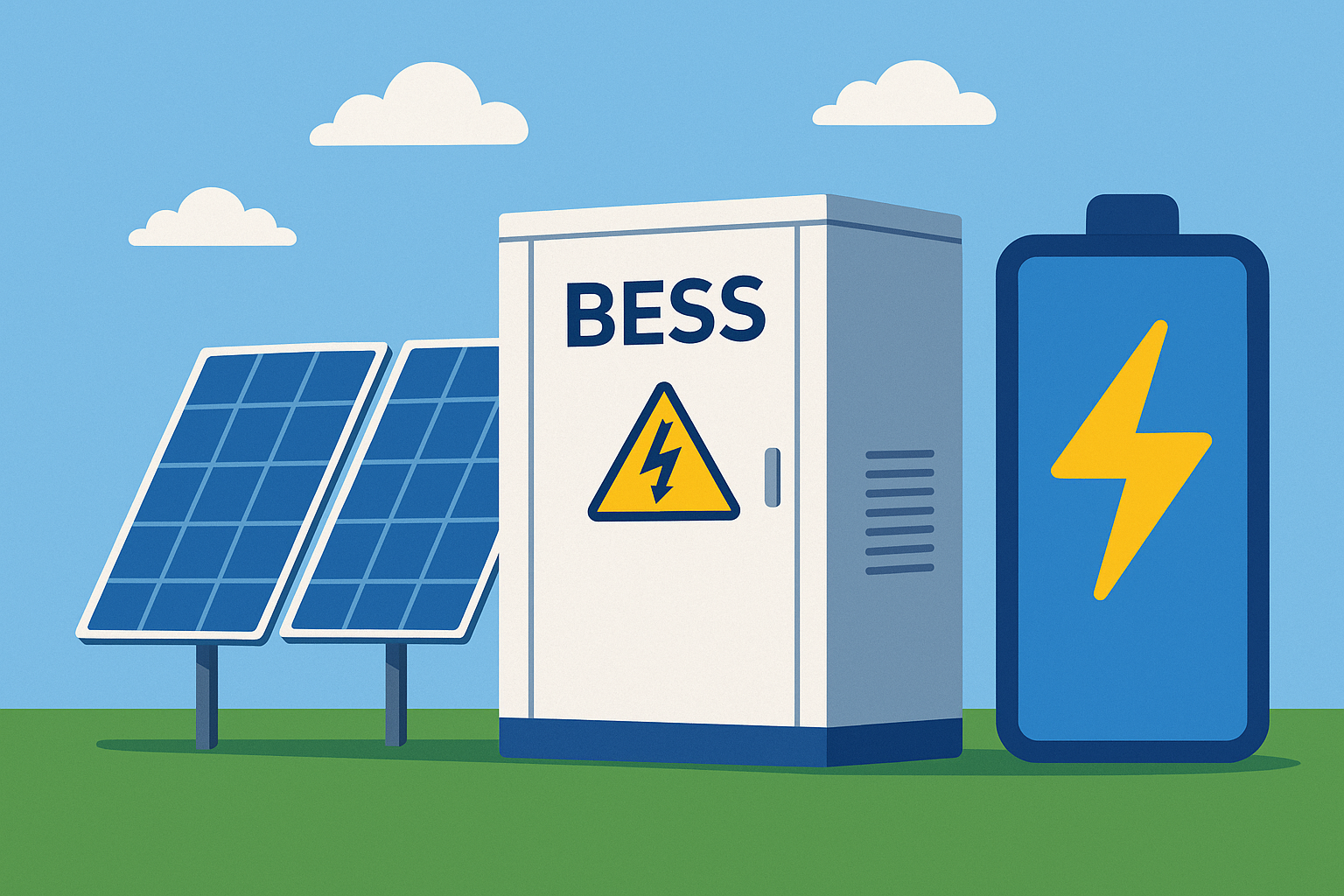
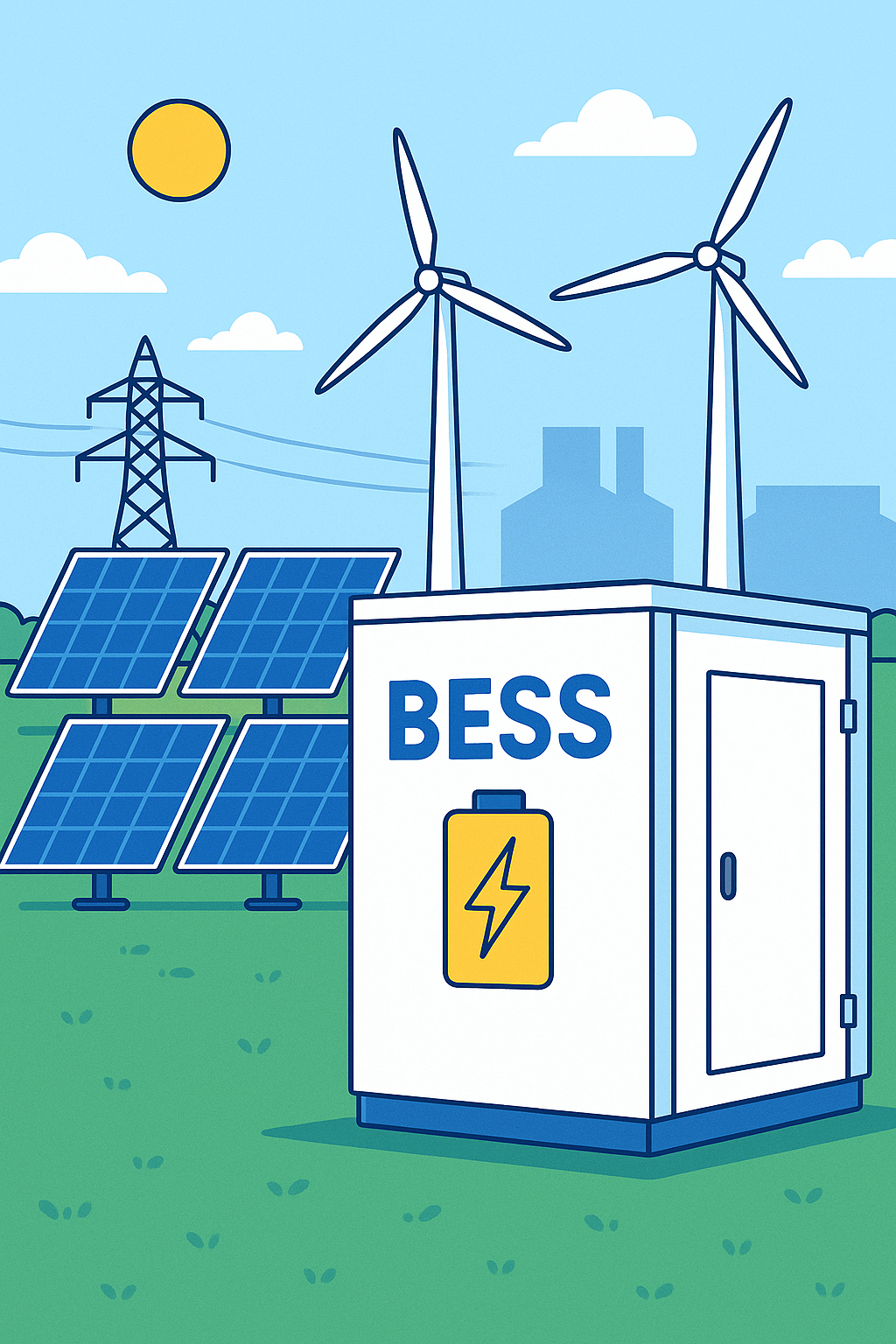
Enter the BESS battery: a Battery Energy Storage System designed to capture solar energy and release it when it matters most. From small community initiatives to global-scale deployments, the integration of BESS with solar is rewriting the rules of energy management. For industrial battery storage users, municipalities investing in utility scale battery storage, or businesses seeking tailored industrial energy storage solutions, the BESS battery is now a cornerstone of modern solar projects.
This guide explores how BESS works, why it’s crucial for solar adoption, and the key advantages of pairing solar with advanced electricity storage.
What Is a BESS Battery?
A BESS battery is an engineered system that goes beyond basic batteries. It includes:
Battery modules: Often lithium-ion (especially LiFePO4) for high efficiency.
Inverter/PCS (Power Conversion System): Converts energy between DC (battery) and AC (grid).
Battery Management System (BMS): Maintains safety and optimizes performance.
Thermal controls and fire suppression: Ensure reliability under varied conditions.
Software and EMS (Energy Management System): Provides smart control, forecasting, and integration with the grid.
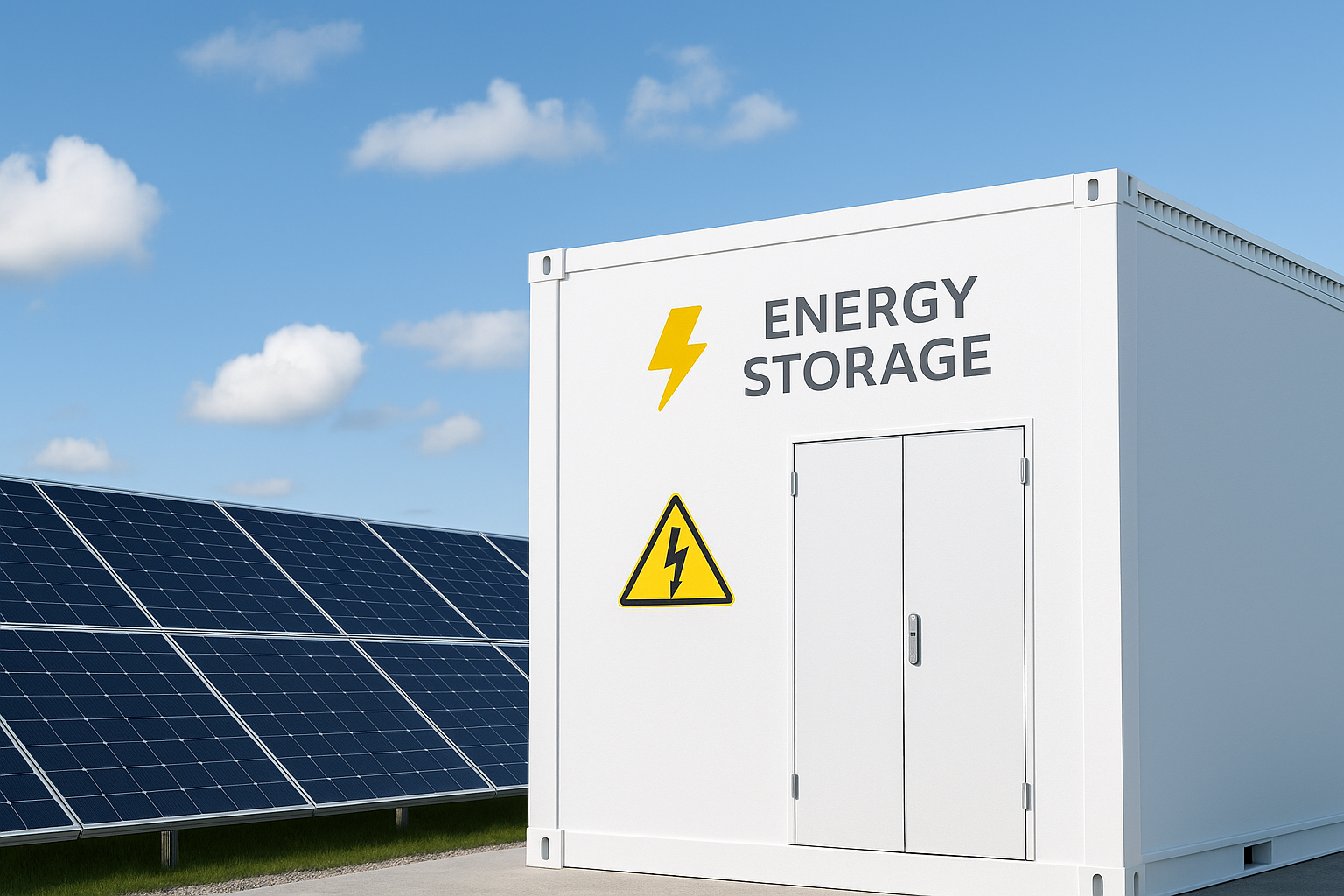
Unlike consumer batteries, a BESS battery can store anywhere from a few kilowatt-hours to hundreds of megawatt-hours, making it versatile for residential, industrial battery storage, and utility scale battery storage.
Why Solar Projects Need Storage
While solar is a clean powerhouse, it’s inherently variable. Here are the main reasons solar projects integrate BESS batteries:
Time shifting: Store midday solar surplus for use at night.
Curtailment reduction: Avoid wasting solar output when demand is low.
Demand matching: Deliver power during evening peaks.
Grid support: Provide stabilization services to keep electricity networks secure.
Backup: Supply critical loads during outages.
Without electricity storage, solar’s potential remains limited. With BESS, solar projects deliver energy that is flexible, reliable, and dispatchable
Residential, Industrial, and Utility Applications
Residential Solar Projects
Typical BESS: 10–20 kWh.
Key advantage: Provides home backup, reduces bills with time-of-use shifting, supports EV charging.
Industrial Battery Storage for Businesses
Typical BESS: 500 kWh – 10 MWh.
Key advantage: Peak shaving, production continuity, and energy independence.
Example: Factories integrating solar with industrial energy storage solutions lower both costs and emissions.
Utility Scale Battery Storage for Grids
Typical BESS: 50–500 MWh.
Key advantage: Smooths renewable generation, reduces curtailment, and provides large-scale backup during system failures.
Example: National grids pairing solar with utility scale battery storage to handle evening peaks.
Key Advantages of BESS for Solar Projects
1. Optimized Renewable Utilization
Pairing a BESS battery with solar ensures every kilowatt-hour is captured and used. This increases the effective efficiency of solar projects, boosting ROI and lowering payback periods.
2. Energy Resilience and Reliability
When blackouts occur, solar panels alone cannot provide power without storage. Adding industrial energy storage solutions allows facilities to operate continuously and communities to remain powered.
3. Peak Demand Management
Utilities often charge high fees during peak demand. With industrial battery storage, businesses can discharge during these windows to reduce bills—an advantage that can save millions annually in large operations.
4. Grid Stability and Flexibility
Utility scale battery storage not only supports solar projects but also delivers grid services like voltage regulation, frequency balancing, and fast-response reserves.
5. Scalability Across Sectors
From residential rooftops to industrial energy storage solutions and national-scale deployments, the modular nature of BESS means it scales with demand.
Economic Benefits
Lower energy costs – Businesses cut peak tariffs with industrial battery storage.
Incentives – Tax credits and clean energy grants reduce upfront costs for solar+BESS systems.
ROI acceleration – Solar projects with storage achieve shorter payback thanks to energy shifting.
Case Studies
United States: California grid operators rely on utility scale battery storage to meet evening demand, with solar+BESS covering nearly 10% of peak energy in 2024.
Australia: Large solar projects with industrial battery storage power remote mines, cutting diesel consumption.
India: Rural electrification relies on village-scale BESS batteries integrated with solar, providing affordable, stable power for the first time.
Technology Trends
Chemistry innovation: LiFePO4 dominates, but solid-state and flow batteries are emerging for long-duration electricity storage.
Software intelligence: AI-powered EMS improves performance forecasting and load management.
Hybrid systems: Solar+BESS combined with hydrogen or thermal storage expands applications.
Challenges to Address
High upfront capital for large utility scale battery storage projects.
Supply chain risks tied to lithium and cobalt.
End-of-life recycling for millions of tons of batteries.
Policy clarity needed for integrating BESS into wholesale energy markets.
Future Outlook
By 2030, global installed capacity for BESS is expected to surpass 1,000 GWh. Key drivers include:
The rise of solar projects worldwide.
Growing demand for industrial energy storage solutions.
Expansion of utility scale battery storage for grid decarbonization.
Increasing role of electricity storage in energy independence and resilience strategies.
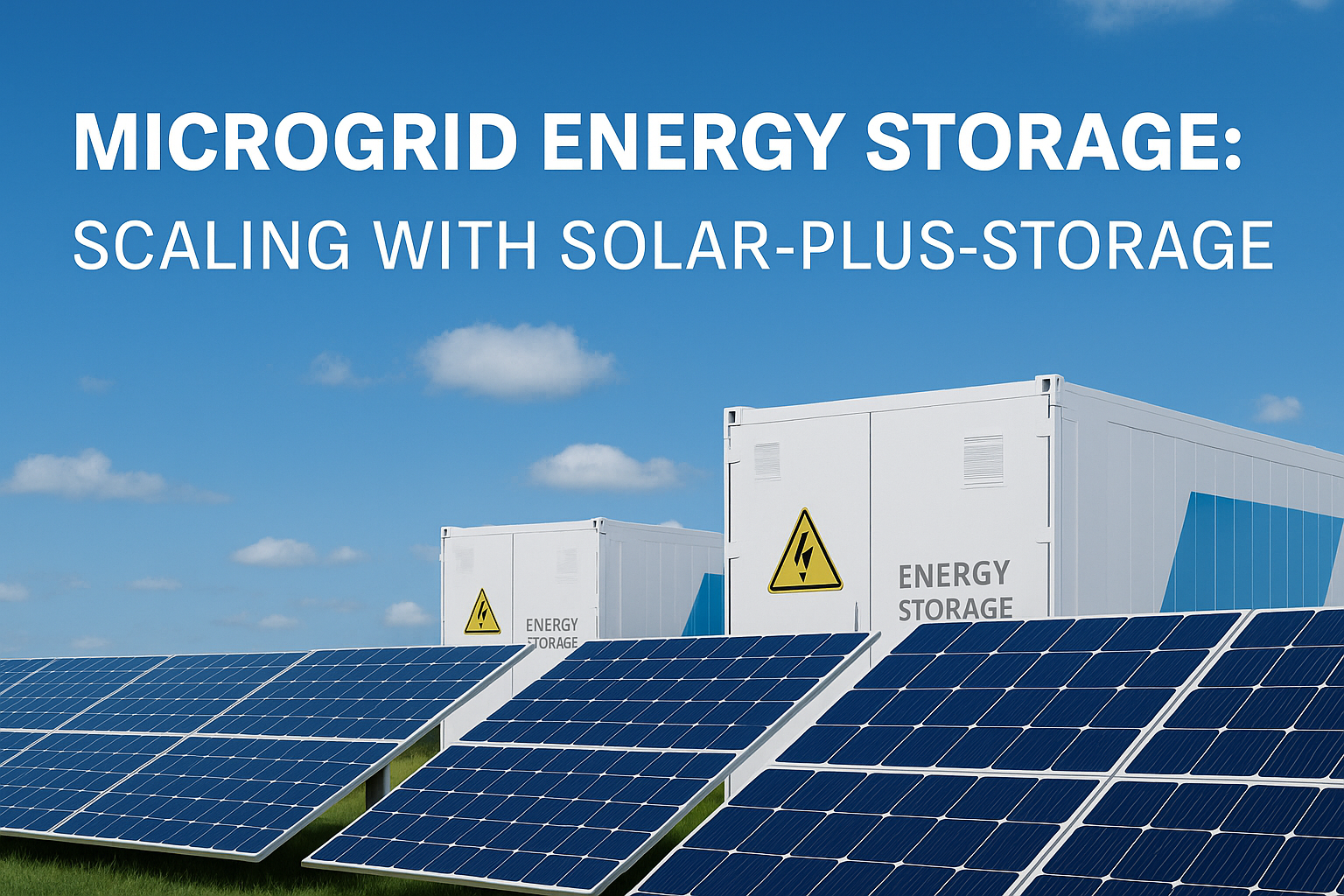
The combination of solar generation with a BESS battery is one of the most powerful tools available in the clean energy transition. For homes, it provides independence and security. For businesses, industrial battery storage delivers cost savings and resilience. For nations, utility scale battery storage ensures that grids can handle variable renewable energy while maintaining stability.
In short, the BESS battery transforms solar projects from daytime-only producers into round-the-clock, reliable power providers. With scalable industrial energy storage solutions and flexible electricity storage capabilities, BESS is driving a sustainable, resilient energy future for all.
Amble Sun offers reliable, eco-friendly solar energy, reducing costs, increasing efficiency, promoting sustainability, and supporting a greener future worldwide.







Leave a Reply